
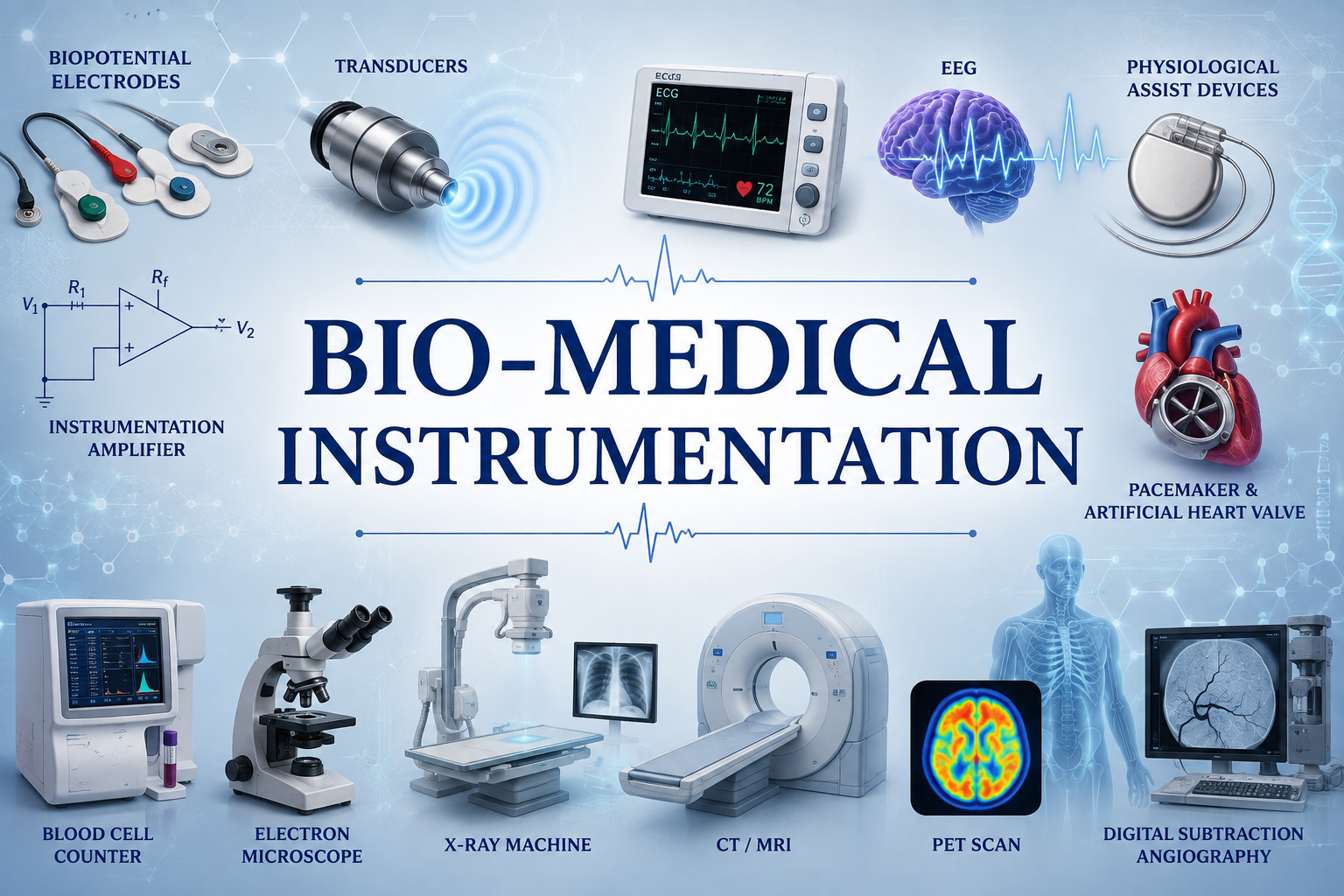
This course introduces the principles and applications of biomedical instrumentation used in modern healthcare. It covers the design of medical instruments, biopotential electrodes, transducers, bio-signal amplifiers, and recording systems such as ECG, EEG, and EMG. The course explores physiological assist devices including pacemakers, defibrillators, heart-lung machines, and dialysis equipment. It also examines specialized medical instruments such as blood cell counters, electron microscopes, X-ray systems, and radiation detectors. Finally, it presents advanced medical imaging techniques, including CT, MRI, PET, digital subtraction angiography, lasers, endoscopes, and computer-based diagnostic technologies used in clinical practice.
- Teacher: Arockiajency Physics
- Teacher: Dr. P. Evangelin Teresa Physics
- Teacher: S.Mariasteffi Physics
- Teacher: sherin Zoo
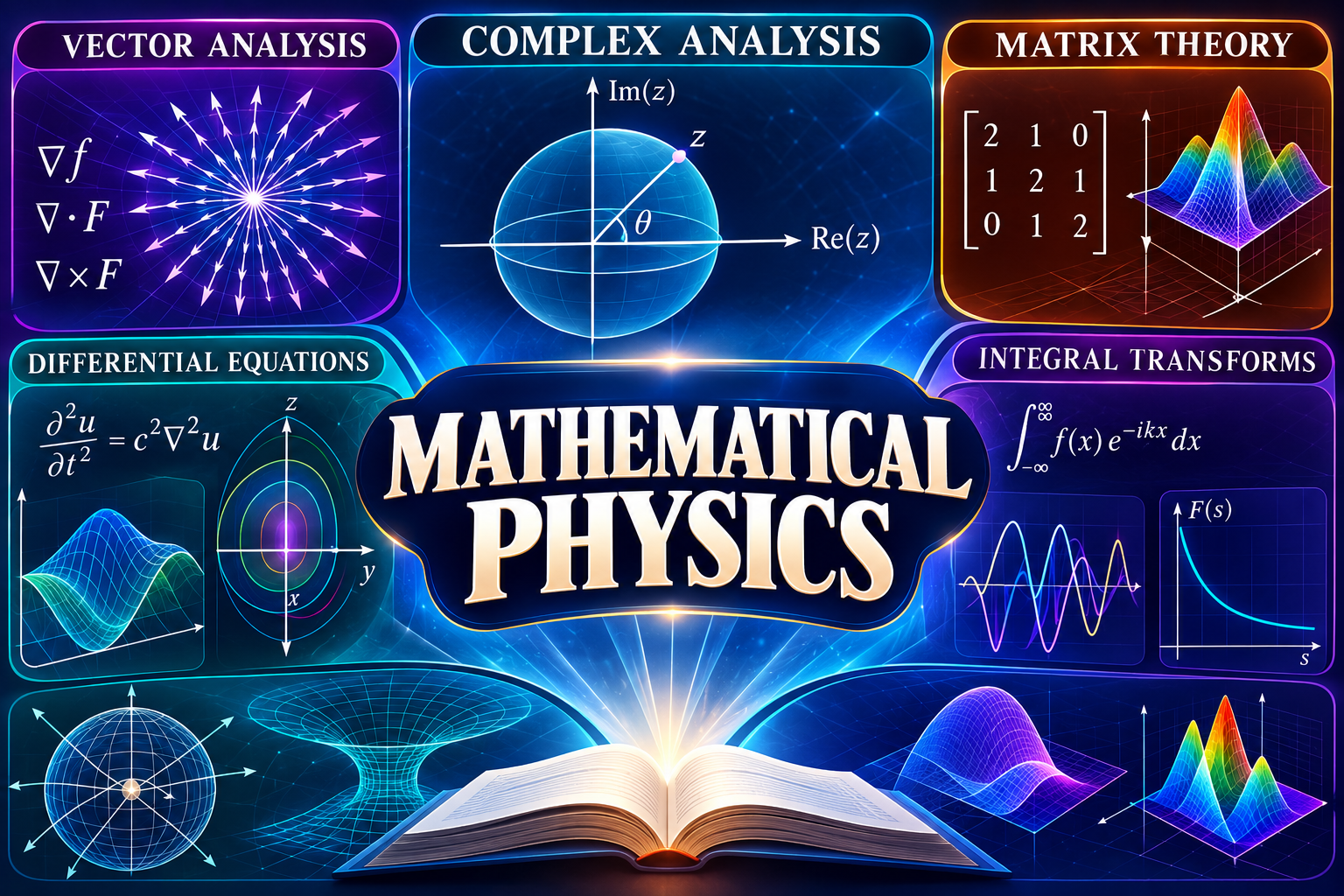
This course provides a comprehensive foundation in the mathematical methods essential for physics and engineering. It introduces vector analysis, including differential operators and coordinate systems, followed by complex analysis with analytic functions, contour integration, and series expansions. The course explores matrix theory, emphasizing eigenvalues, eigenvectors, diagonalization, and matrix polynomials. Students also study ordinary and partial differential equations, boundary value problems, series solutions, and special functions. Finally, the course covers Fourier and Laplace transforms, their properties, and applications in solving physical and engineering problems. These mathematical tools develop analytical and problem-solving skills for advanced scientific and technological applications.
- Teacher: Dr.A Juliet Christina Phy
- Teacher: Arockiajency Physics
- Teacher: Dr. A. Jegatha Christy Physics
- Teacher: sherin Zoo
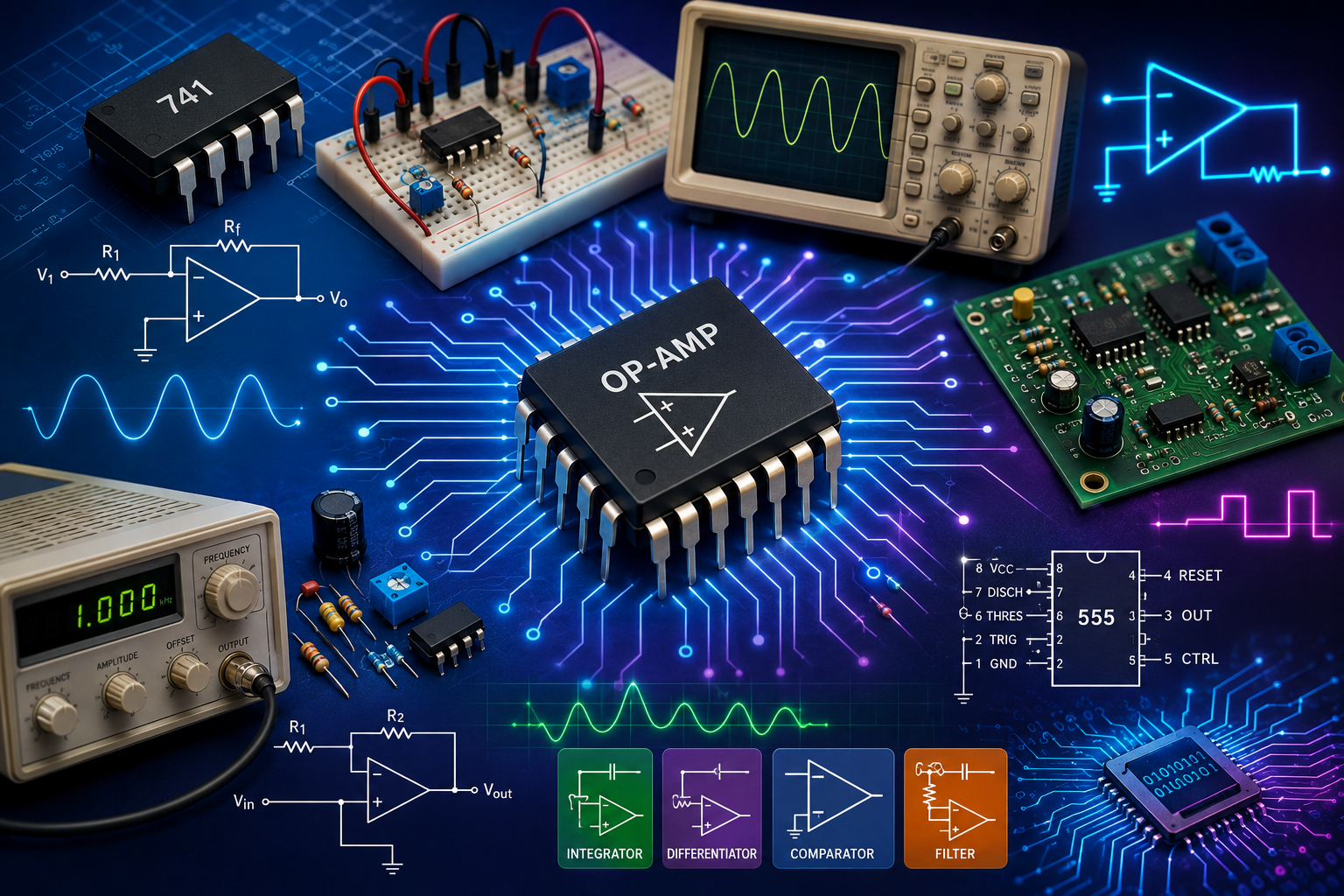
This course introduces the fundamentals of integrated circuits and operational amplifiers, covering their characteristics, internal architecture, and performance parameters. It explores a wide range of Op-Amp applications, including amplifiers, converters, comparators, rectifiers, filters, waveform shaping circuits, and analog computational circuits. The course also examines active filters, 555 timer circuits, phase-locked loops, and voltage-controlled oscillators. In addition, students learn the principles and applications of voltage regulators, switching regulators, and IC regulators. The course concludes with digital-to-analog and analog-to-digital conversion techniques, preparing students to design, analyze, and apply analog electronic systems in practical engineering applications.
- Teacher: Dr.A Juliet Christina Phy
- Teacher: Arockiajency Physics
- Teacher: Dr. P. Evangelin Teresa Physics
- Teacher: sherin Zoo
This course introduces the principles of analytical mechanics through the Lagrangian and Hamiltonian formulations of classical dynamics. It covers generalized coordinates, virtual work, D’Alembert’s principle, Hamilton’s principle, variational methods, and conservation laws. The course also explores canonical transformations, Poisson and Lagrange brackets, phase space, and Liouville’s theorem. Applications include small oscillations, normal modes, and the dynamics of rigid bodies using Euler’s angles, inertia tensor, and Euler’s equations. Emphasis is placed on developing mathematical techniques and physical insight for solving complex mechanical systems.
- Teacher: Arockiajency Physics
- Teacher: Mrs.A.Hemalatha Physics
- Teacher: sherin Zoo