

E-Office and ICT Skills is a practical course that equips learners with essential digital competencies for academic, professional and administrative environments. It covers office automation tools, digital communication, online collaboration, data management and information and communication technologies (ICT). The course enhances productivity, promotes effective digital communication and prepares learners to use modern technologies efficiently for education, research and workplace applications.
- Teacher: Arockiajency Physics
- Teacher: DrJency Priya
This course covers the fundamentals of Graph Theory, including graphs, trees, connectivity, spanning trees, shortest paths, Euler and Hamiltonian graphs, graph colouring, and optimization problems, with applications in computer science, networks, transportation, artificial intelligence, operations research, and data analysis
- Teacher: Dr. D. ABINAYA MATHEMATICS
- Teacher: Arockiajency Physics
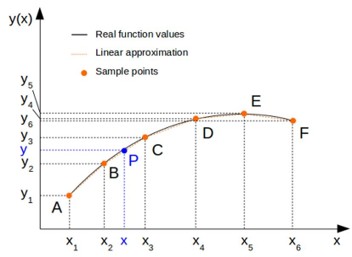
Numerical Analysis introduces students to computational techniques for obtaining approximate solutions to mathematical problems that cannot be solved analytically. The course covers numerical methods for solving nonlinear equations, interpolation, ordinary differential equations, numerical differentiation, and numerical integration. It emphasizes the accuracy, convergence, and stability of numerical algorithms used in scientific and engineering computations. Students develop the ability to analyze computational errors, implement numerical techniques, and interpret the results effectively. Overall, the course equips learners with practical problem-solving skills for applications in mathematics, science, engineering, and data-driven research.
- Teacher: Arockiajency Physics
- Teacher: santhi pk
Real Analysis–I is a foundational postgraduate mathematics course that provides a rigorous treatment of the real number system and the fundamental concepts of analysis. The course introduces the theoretical framework required to understand continuity, convergence, metric spaces, compactness, connectedness, and sequences and series. Emphasis is placed on mathematical rigor, proof-writing techniques, logical reasoning, and the development of analytical thinking.
- Teacher: Arockiajency Physics
- Teacher: Kanmani Pushpa
Algebra – I introduces advanced concepts in abstract algebra, focusing on the structure and properties of groups, rings, and polynomial rings. The course develops a rigorous understanding of Sylow theorems, direct products, ideals, quotient rings, Euclidean rings, and unique factorization. It emphasizes logical reasoning, proof techniques, and algebraic problem-solving skills. Students explore the theory of polynomial rings and irreducibility criteria, strengthening their foundation for higher mathematics and research. The course also highlights the applications of abstract algebraic structures in mathematical modelling and related fields.
- Teacher: DR. SR. Kitheri Maths
- Teacher: Arockiajency Physics