
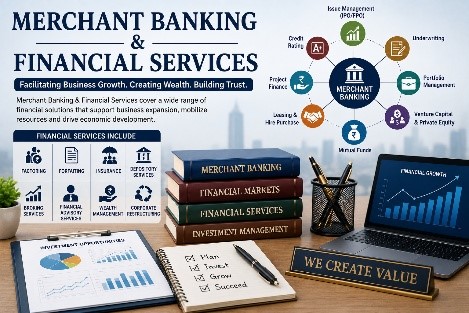
This course provides a comprehensive understanding of the concepts, functions, and significance of merchant banking and financial services in the modern financial system. It covers merchant banking activities, financial markets, leasing, hire purchase, venture capital, mutual funds, factoring, forfaiting, credit rating, insurance, and other financial service products.
- Teacher: Dr. Mrs. N. Lavanyalakshmi Commerce
- Teacher: Dr.C.Kalaivani Commerce
- Teacher: Paul Rani Commerce
- Teacher: Sundari MAT
Operations Research (OR) is a scientific and quantitative approach to decision-making that applies mathematical models, statistical techniques, and analytical methods to solve complex business and managerial problems. It helps organizations utilize available resources efficiently, optimize costs, maximize profits, and improve overall operational performance.
- Teacher: Dr. Mrs. N. Lavanyalakshmi Commerce
- Teacher: Dr.M.CHITRA DEVI Commerce
- Teacher: Paul Rani Commerce
- Teacher: Sundari MAT
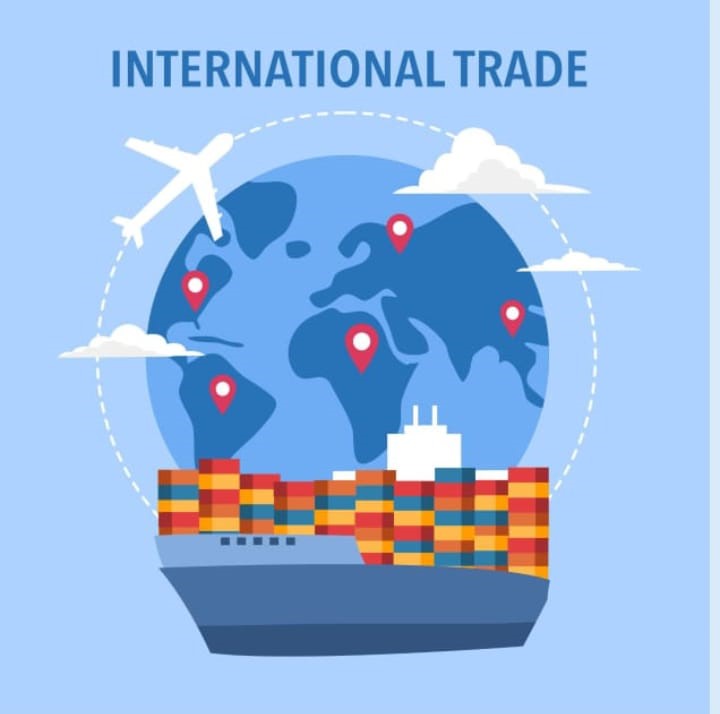
International Trade is a foundational course that provides students with an understanding of the principles, theories, and practices of global trade. It covers topics such as the basis of international trade, trade policies, export and import procedures, balance of payments, foreign exchange, international trade organizations, and trade agreements. The course enables students to analyze global trade dynamics and understand the role of international trade in economic growth and business development.
- Teacher: Dr. Mrs. N. Lavanyalakshmi Commerce
- Teacher: Paul Rani Commerce
- Teacher: Dr.S.Velanganni Commerce - Economics
- Teacher: Sundari MAT

Enterprise Resource Planning (ERP) is an integrated software system that manages and automates core business processes such as finance, human resources, production, inventory, and sales. It enables real-time data sharing across departments, improving coordination, efficiency, and decision-making within an organization.
- Teacher: Akina Barveen Commerce
- Teacher: Dr. Mrs. N. Lavanyalakshmi Commerce
- Teacher: Paul Rani Commerce
- Teacher: R.Vijayalakshmi Commerce
- Teacher: Sundari MAT
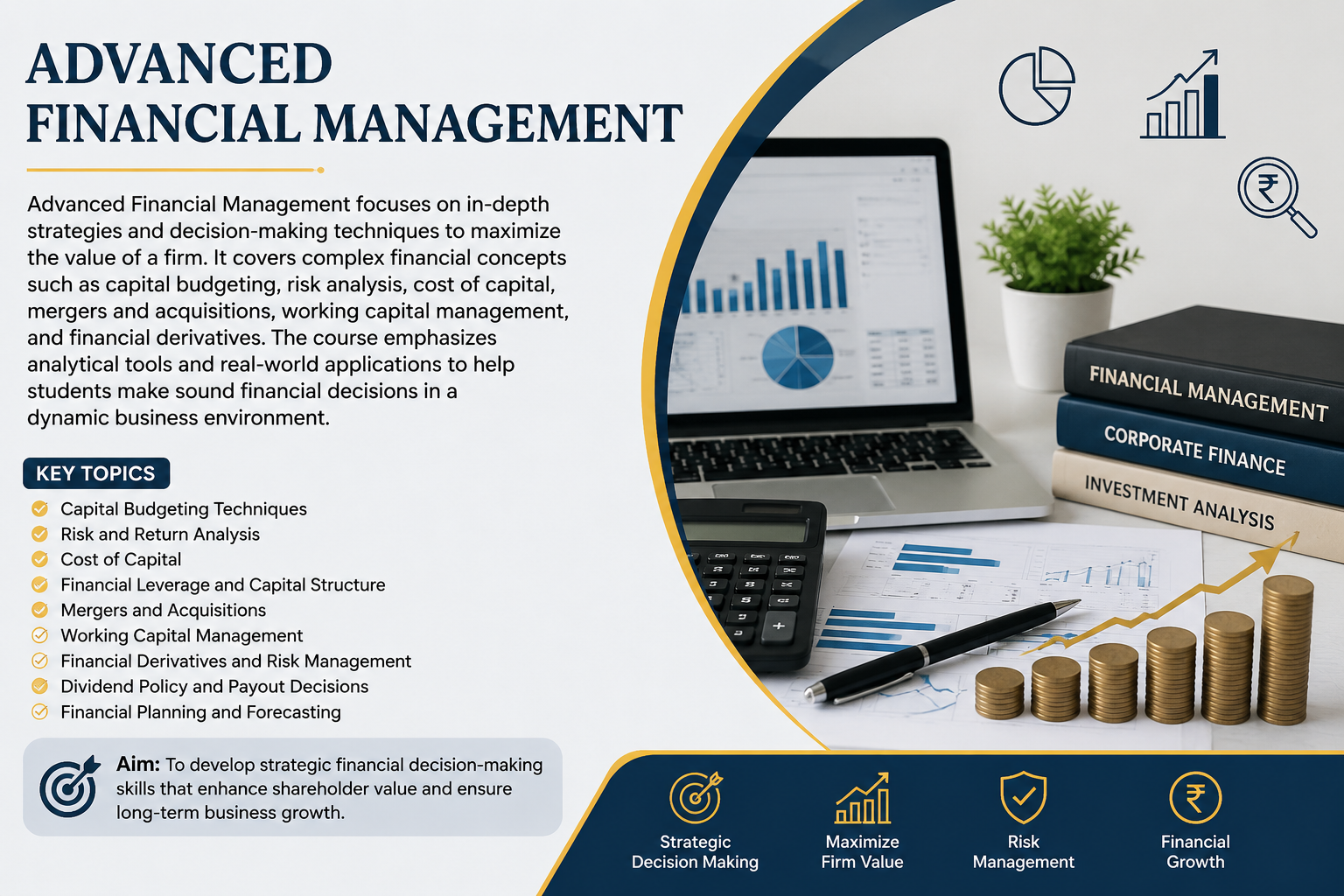
Advanced Financial Management is a specialized course that focuses on strategic financial decision-making to maximize organizational value. It covers topics such as capital budgeting, working capital management, risk analysis, cost of capital, dividend policy, mergers and acquisitions, and financial planning, enabling students to solve complex financial problems in a dynamic business environment.
- Teacher: Dr. Mrs. N. Lavanyalakshmi Commerce
- Teacher: Paul Rani Commerce
- Teacher: Sundari MAT